
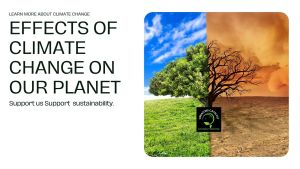
Climate change has a profound impact on human health, affecting it through both direct and indirect means. Extreme heatwaves, rising sea levels, alterations in precipitation patterns leading to floods and droughts, and intense hurricanes can directly result in injuries, illnesses, and even fatalities. These direct effects are well-documented in numerous studies.
Furthermore, the consequences of climate change are not limited to direct physical harm. Indirectly, it impacts health by bringing about environmental changes. For instance, deteriorating air quality can have detrimental effects on respiratory and cardiovascular health. Alterations in temperature and precipitation patterns can influence the survival, distribution, and behavior of insects and other species, potentially leading to changes in infectious diseases.

Source: https://www.niehs.nih.gov/
https://omgeedigital.com/unveiling-the-impact-of-climate-change-on-escalating-droughts/: Effects of Climate Change
Introduction:
As our planet faces the relentless challenges of climate change, it’s essential to examine how these environmental shifts are impacting our precious ecosystems. From soaring global temperatures and rising sea levels to altered weather patterns and habitat destruction, the effects of climate change are reverberating through the natural world. “Exploring the Climate Change Impacts on Our Ecosystem” takes you on a journey through this critical issue.
Our ecosystems, encompassing a rich tapestry of flora and fauna, provide numerous services essential to human survival, from clean air and water to food production and climate regulation. The delicate balance of life within these ecosystems is now under siege, and understanding the repercussions is paramount.
In this exploration, we delve into the consequences climate change poses to ecosystems worldwide. We’ll uncover how species are adapting, struggling, or vanishing in the face of environmental transformations. From the lush rainforests to the polar ice caps, the effects of climate change are felt in every corner of our planet.
This exploration is not merely an examination of challenges; it’s a call to action. We’ll discuss the pressing need for sustainable and resilient solutions to mitigate these impacts. Understanding the intricacies of climate change’s influence on our ecosystems is a vital step toward preserving the biodiversity and stability of our planet for future generations.
Challenges:
- Habitat Loss: Climate change is causing the destruction and alteration of habitats around the world. Rising temperatures and sea levels are encroaching on habitats, leading to loss of crucial ecosystems like coral reefs, mangroves, and polar ice caps. This threatens the species that rely on these environments and can disrupt the delicate balance of food chains.
- Biodiversity Loss: Climate change can lead to shifts in species distribution and extinction risks. Many species are struggling to adapt to changing conditions, while others may not survive at all. The loss of biodiversity not only affects the ecosystems themselves but also human societies that rely on diverse ecosystems for resources and services.
- Extreme Weather Events: Increasingly frequent and severe weather events, such as hurricanes, droughts, and wildfires, can wreak havoc on ecosystems. These events disrupt ecosystems and can lead to widespread damage and loss of life.
- Ocean Acidification: The absorption of excess carbon dioxide by the world’s oceans leads to ocean acidification. This harms marine life, particularly organisms with calcium carbonate shells and skeletons, like corals and some shellfish.
- Species Interactions: Changes in the distribution and behavior of species can disrupt intricate ecological relationships. For example, shifts in the timing of migrations or the availability of prey can impact predator-prey dynamics and competition for resources.
Solutions:
- Mitigation and Emission Reduction: To address climate change impacts on ecosystems, it’s essential to reduce greenhouse gas emissions. This involves transitioning to renewable energy sources, improving energy efficiency, and implementing policies to limit emissions from various sectors like transportation and industry.
- Conservation and Protected Areas: The establishment and expansion of protected areas and wildlife reserves can help safeguard vulnerable ecosystems and the species that inhabit them. These areas provide safe havens for wildlife and can also serve as research and education hubs.
- Sustainable Land and Resource Management: Implementing sustainable land use practices, such as reforestation, afforestation, and sustainable agriculture, can mitigate habitat loss and protect biodiversity.
- Adaptation Strategies: To help species adapt to changing conditions, conservationists and scientists are working on strategies like assisted migration, captive breeding programs, and the creation of climate-resilient habitats.
- Public Awareness and Education: Increasing public awareness about the impacts of climate change on ecosystems and the importance of conservation is crucial. Education and engagement can drive support for policies and actions that protect the environment.
- International Collaboration: Climate change is a global issue, and international cooperation is vital. Agreements like the Paris Agreement aim to unite countries in the fight against climate change and its impacts.
- Technological Innovation: Advances in technology, such as remote sensing and data analysis, can aid in monitoring ecosystems and understanding the effects of climate change. This information can inform conservation efforts.
Here are some key statistics and data points related to climate change impacts on ecosystems that support visual representations:
- Global Temperature Rise:
- The global average temperature has increased by approximately 1.2 degrees Celsius (2.2 degrees Fahrenheit) above pre-industrial levels.
- Visual representation: Line chart showing the temperature increase over time.
- Habitat Loss and Deforestation:
- Over 80,000 acres of rainforest are destroyed daily, primarily due to deforestation.
- Visual representation: Bar chart showing the extent of daily rainforest destruction.
- Biodiversity Loss:
- The International Union for Conservation of Nature (IUCN) Red List reports that 41% of amphibians and 34% of conifers are threatened with extinction.
- Visual representation: Pie chart illustrating the percentage of threatened amphibians and conifers.
- Ocean Acidification:
- Oceans have absorbed about 30% of the CO2 emitted into the atmosphere, resulting in increased ocean acidity.
- Visual representation: Diagram showing the process of ocean acidification.
- Extreme Weather Events:
- The number of extreme weather events, such as hurricanes, heatwaves, and wildfires, has been increasing globally.
- Visual representation: Line chart or map showing the increase in extreme weather events.
- Species Distribution Changes:
- Studies show that species are shifting their ranges by an average of 17 km (10.5 miles) per decade towards the poles.
- Visual representation: Map illustrating species range shifts.
- Greenhouse Gas Emissions:
- In 2019, global carbon dioxide (CO2) emissions reached 36.8 billion metric tons.
- Visual representation: Bar chart showing global CO2 emissions by year.
- Protected Areas and Conservation Efforts:
- There are over 200,000 protected areas worldwide, covering around 15% of the Earth’s land and 7% of its oceans.
- Visual representation: World map with protected areas highlighted.
- Public Awareness and Support:
- Surveys indicate that a growing majority of the global population is concerned about climate change and supports actions to combat it.
- Visual representation: Bar chart showing public awareness and support trends.
- International Agreements:
- The Paris Agreement has been ratified by 191 parties, committing to limiting global warming to well below 2 degrees Celsius.
- Visual representation: A world map with countries that have ratified the Paris Agreement highlighted.
Join us as we embark on a journey to uncover the intricacies of climate change impacts on our ecosystems and explore the urgent importance of conservation and sustainable practices in the face of this global crisis.