
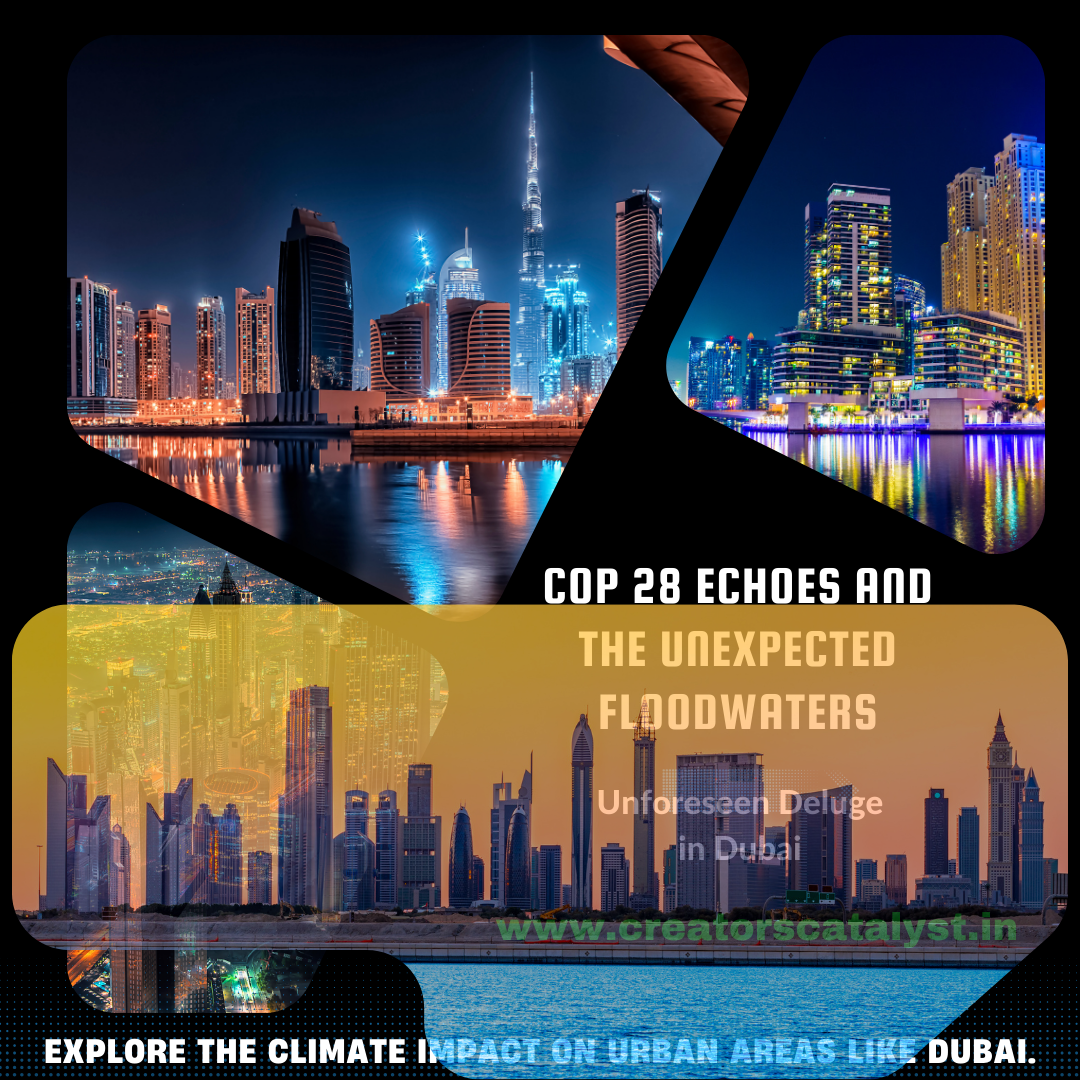
In a surprising turn of events, Dubai, known for its futuristic skyline and arid climate, recently experienced severe floods. This unexpected phenomenon not only raised eyebrows but also drew attention to the pressing issue of climate change and its implications for urban resilience. As we delve into the intricacies of Dubai floods and reflect on a notable moment from COP 28, let’s explore the underlying factors, impacts, and strategies for building a more resilient future.
Amidst Dubai’s modernity and aridity, recent severe floods have spotlighted climate change’s impact on urban resilience. Exploring Dubai’s flood complexities and COP 28’s insights, we uncover factors, impacts, and strategies for resilience.
Understanding the Dubai Floods
Dubai’s geographical location in a desert region coupled with its rapid urbanization has created a unique set of challenges regarding flood management. Despite its modern infrastructure, the city’s drainage systems are often overwhelmed during heavy rainfall, leading to the inundation of streets and infrastructure. From the influence of climate change to the limitations of existing drainage infrastructure, various factors contribute to the vulnerability of Dubai to floods.
Climate Change
Climate change, driven by human activities, poses an existential threat to our planet’s ecosystems and societies. Rising temperatures, extreme weather events, and sea-level rise are among its dire consequences. Urgent global action is imperative to mitigate its impacts and build a sustainable future for generations to come.


Impact of Dubai Floods
The repercussions of floods in Dubai extend beyond mere inconvenience, affecting residents, businesses, and the environment alike. The economic losses incurred due to disrupted transportation and property damage can be substantial. Moreover, the environmental consequences, such as pollution and habitat destruction, pose long-term risks to ecosystems and water resources. The tourism sector, a vital component of Dubai’s economy, also suffers from the negative publicity generated by flood incidents.
Lessons from COP 28
Against the backdrop of Dubai’s flood challenges, a retrospective glance at COP 28 offers valuable insights into global efforts to combat climate change. At this pivotal event, world leaders and experts convened to address the pressing issues of climate adaptation and resilience. Discussions on urban planning, infrastructure investment, and international cooperation underscored the urgency of adopting holistic approaches to mitigate the impacts of extreme weather events.
Strategies for Future Resilience
Looking ahead, proactive measures are imperative to enhance Dubai’s resilience in the face of climate-related risks. Embracing innovative technologies, such as smart drainage systems and weather forecasting tools, can bolster the city’s preparedness for floods. Furthermore, integrating green infrastructure into urban development projects offers sustainable solutions for flood prevention and mitigation. Collaboration among government agencies, private sectors, and civil society is crucial to implementing comprehensive resilience strategies.

Conclusion
The convergence of Dubai floods and the discourse at COP 28 serves as a poignant reminder of the interconnectedness of climate change and urban resilience. By learning from past experiences and embracing forward-thinking solutions, cities like Dubai can navigate the challenges posed by extreme weather events and pave the way for a more sustainable future.
FAQ
What are the causes of flooding in Dubai?
Flooding in Dubai is primarily caused by a combination of factors, including rapid urbanization, inadequate drainage systems, and the city’s geographical location in a desert region. These factors, coupled with the influence of climate change, increase the likelihood of extreme weather events and exacerbate the city’s vulnerability to floods.
How does climate change contribute to extreme weather events like floods?
Climate change contributes to extreme weather events like floods by altering precipitation patterns, increasing the frequency and intensity of heavy rainfall, and raising sea levels. These changes can overwhelm existing drainage infrastructure, leading to urban flooding.
What measures has the Dubai government taken to mitigate flood risks?
The Dubai government has taken various measures to mitigate flood risks, such as investing in infrastructure upgrades, implementing smart drainage systems, and promoting public awareness campaigns. These efforts aim to enhance the city’s preparedness for floods and minimize their impacts on residents, businesses, and the environment.
Preventive Measures
The UAE is taking several measures to prevent future floods and minimize their impact on the environment and wildlife. These measures include:
1. Monitoring Weather Changes: The National Centre of Meteorology and Seismology is responsible for monitoring weather conditions and issuing warnings to the public[2].
2. Regular Maintenance of Electrical Wirings: Regular maintenance of electrical wirings and ensuring they are firmly fixed can help prevent electrical hazards during floods[2].
3. Checking Water Sewerage Channels: Regular maintenance of water sewerage channels can help prevent water accumulation and flooding[2].
4. Preparing Emergency Kits: Keeping emergency kits ready for use during floods can help ensure the safety and well-being of individuals and families[2].
5. Disconnecting Home Devices from Power Source: Disconnecting home devices from the power source during floods can help protect them from electrical current running through the home’s electrical system in case lightning strikes[3].
6. Avoiding Touching Metallic Objects or Electrical Devices: Avoiding touching metallic objects or electrical devices during floods can help prevent electrical hazards[3].
7. Disconnecting Electrical Current and Closing Water Network in Case of Hurricanes: Disconnecting electrical current and closing the water network in case of hurricanes can help prevent electrical and water hazards[3].
8. Avoiding Showering During Thunder and Lightning: Avoiding showering during thunder and lightning can help prevent electrical hazards[3].
9. Avoiding Standing Under Tall Trees, Electricity Posts and Telecommunication Posts: Avoiding standing under tall trees, electricity posts and telecommunication posts during floods and thunderstorms can help prevent electrical and falling hazards[3].
10. Using Adequate Firefighting Tools and Equipment: Preparing adequate firefighting tools and equipment during floods can help prevent fire hazards caused by lightning[3].
These measures can help prevent electrical, water, falling, and fire hazards during floods, thereby minimizing their impact on the environment and wildlife.


Leave a Reply