
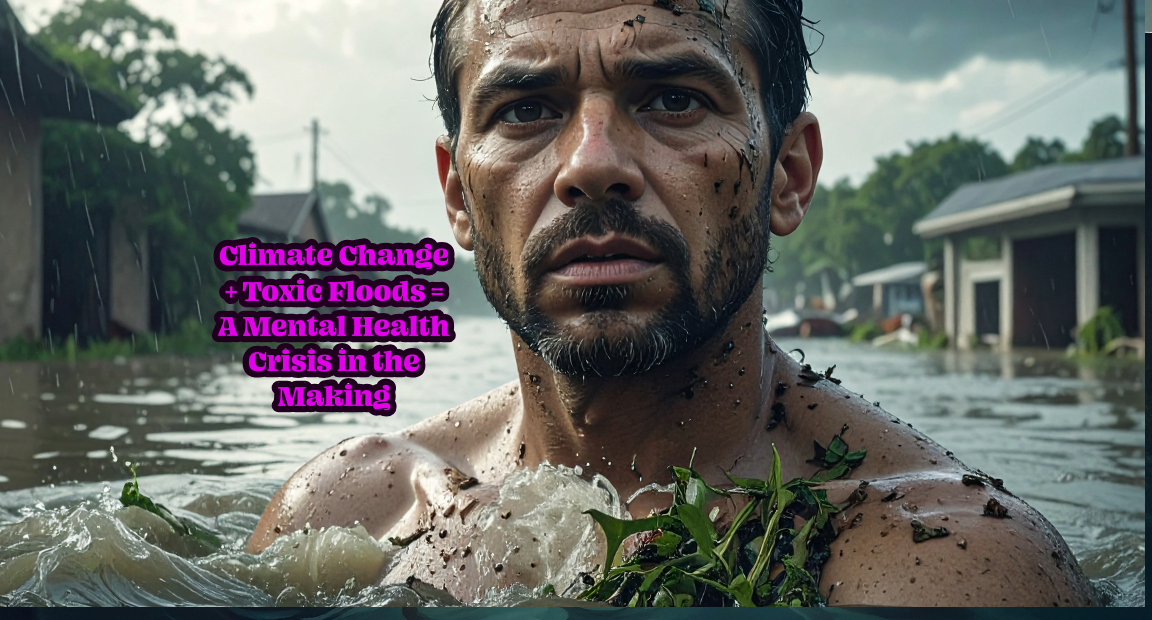

When Waters Turn Toxic: The Hidden Mental Health Crisis Haunting Flood Survivors
Climate change is not only reshaping our physical landscapes—it is fundamentally altering our psychological well-being. Recent research from Rice University and the University of Alberta reveals a disturbing connection between flood-driven environmental contamination and heightened psychological distress in vulnerable neighborhoods. When storms sweep industrial pollutants across entire communities, they leave more than physical destruction in their wake. They plant seeds of deep-seated anxiety about the future, particularly in marginalized populations already bearing disproportionate environmental burdens.

The Convergence of Two Crises
Major storms increasingly mobilize industrial contaminants accumulated over decades, creating what researchers call “toxic fear”—a profound anxiety stemming from the realization that flooding brings not just water, but poison. This phenomenon represents the collision of two major environmental challenges: rising climate risks and legacy industrial pollution. For generations, these were treated as separate problems requiring distinct solutions. Today, they merge into a compound crisis that demands urgent, integrated action.
Hurricane Harvey’s 2017 assault on Houston exposed this dangerous intersection. The storm triggered the release of at least 8.3 million pounds of unpermitted air pollution from petrochemical plants across Texas. More than 40 facilities reported damage, with floodwaters carrying over 2,200 pounds of chromium and 1,433 pounds of nickel into Galveston Bay. Toxic floodwaters contaminated residents who suspected their neighborhoods during Harvey expressed significantly higher concern about future flooding, worrying intensely about impacts to their homes, health, and neighborhoods—pillars of community resilience.
Understanding the Contamination Pathway
Industrial activity has produced enormous amounts of contamination at risk of remobilization during local flood events. When floodwaters overflow riverbanks and inundate urban areas, they stir up contaminated sediment and debris accumulated over centuries. Toxic substances—including heavy metals, persistent organic chemicals, pharmaceuticals, and banned compounds like asbestos—are released and spread across agricultural lands and residential areas. earth

The problem extends beyond active industrial sites. Historic landfills across the affected regions contain materials that are now banned due to their harmful effects on human health. These sites, constructed before modern environmental regulations, lack protective linings. When flooded, pollutants, including hydrogen cyanide, can leak into the waters entering people’s homes. Analysis shows that thousands of historic landfills sit in areas with significant annual flood probability, creating ticking time bombs as climate change intensifies extreme weather.
The Psychological Toll of Toxic Exposure
The mental health impacts of climate-related disasters extend far beyond immediate trauma. While acute stress from flooding is well-documented, the knowledge that floodwaters carried toxic contaminants adds a layer of existential dread. Researchers found that in terms of climate anxiety, flooding alone creates worry—but when that flood turns toxic, residents worry substantially more about their climate futures.
Climate anxiety now affects broad swaths of the population. A global survey of more than 10,000 young people aged 16 to 25 found that 60 percent described themselves as very worried about climate, with nearly half reporting that anxiety affects their daily functioning. This distress stems not just from witnessing climate impacts, but from anticipating future threats to personal and collective well-being.

The Spectrum of Mental Health Consequences
Flood exposure correlates with increased rates of multiple psychiatric diagnoses. Post-traumatic stress disorder (PTSD) emerges as the most frequently diagnosed condition among flood survivors, with prevalence rates varying considerably—studies report ranges from 15 percent to as high as 89 percent during the first month following major disasters. In India, PTSD incidence in major natural disasters reaches approximately 70 percent in some affected populations.
Beyond PTSD, survivors experience elevated rates of depression, anxiety disorders, sleep disturbances, and in severe cases, suicidal ideation. The psychological burden manifests through multiple pathways. Direct trauma from life-threatening experiences combines with ongoing stressors—loss of homes, displacement, livelihood disruption, and uncertainty about future events. For flood survivors in India, around 70 percent experienced significant psychological stress, with symptoms including depression, anxiety, and PTSD.
Vulnerable populations face compounded risks. Children exposed to flooding show increased mental and behavioral problems, potentially mediated by disruption of schooling and home life. Elderly individuals demonstrate higher vulnerability to developing psychiatric illness after major disasters. Women, particularly widowed or divorced women who lost property, suffer more stress and higher PTSD scores.
Environmental Injustice and Disparate Impacts
The crisis hits hardest in communities of color, where suspected exposure to toxic floodwaters occurs far more frequently. Research reveals stark disparities: the average resident from minority communities impacted by Hurricane Harvey would need to increase household income by more than $200,000 to achieve the same protection from suspected contamination as the average resident from majority communities. For some demographic groups, that protection gap climbs even higher.
This pattern reflects broader environmental injustice. Communities of color face disproportionate exposure to air pollution regardless of income—experiencing roughly 1.5 times more hazardous pollution than other populations. These communities cluster near industrial facilities, highways, and other pollution sources due to historical discriminatory housing policies and ongoing systemic inequities.
The consequences compound across generations. Exposure to environmental toxins during critical developmental periods affects children’s health trajectories. Studies in Houston area schools revealed that children of color face structural disadvantages from policies placing energy production facilities in their neighborhoods, coupled with inadequate urban planning and infrastructure disinvestment. This environmental racism creates intergenerational cycles of vulnerability. jsr
Climate Change as Threat Multiplier
Rising global temperatures amplify flooding frequency and severity. Regions previously considered safe now face unprecedented flood risks. The mass of glaciers, seasonal snow, and frozen systems declines sharply as temperatures rise, while extreme rainfall events intensify. India experiences particular vulnerability—approximately 622 million people face inland flooding risk, with 48 million vulnerable to coastal flooding. Aa
Coastal communities in emerging economies confront escalating threats. Fast-growing population centers face increasing vulnerability to anthropogenic and industrial pollutants, with extreme weather events projected to become more frequent. The 2015 floods in Chennai, for instance, resulted in groundwater contamination with waterborne pathogens, affecting economically weaker communities living in precarious housing along urban waterways.

Building Resilience in Vulnerable Communities
Addressing this convergence crisis requires integrated solutions recognizing that industrial pollution and rising climate risks cannot be treated as separate challenges. Communities need comprehensive strategies spanning prevention, response, and long-term adaptation.
Infrastructure and Engineering Solutions
Structural flood management remains essential but must evolve beyond traditional approaches. Flood-proofing measures include installing barriers, waterproofing buildings, elevating critical equipment, and constructing coastal erosion control structures. Modern approaches increasingly incorporate nature-based solutions—restoring coastal vegetation including mangroves and salt marshes, preserving wetlands, and protecting drainage channels. Bv
Cities like Rotterdam demonstrate how infrastructure can integrate climate adaptation with quality of life enhancement. The city transformed from traditional flood defense to water-sensitive urban management, creating multifunctional water initiatives and resilient infrastructure. Such approaches work particularly well in areas where green infrastructure provides multiple benefits: flood risk reduction, erosion control, habitat preservation, and community well-being.
Industrial facilities must prepare more robustly for extreme weather. Companies need investment in resilient backup electrical systems, as power outages during storms frequently trigger pollution releases. Coordination of facility shutdowns during hurricanes, planned by environmental agencies, can minimize pollution impacts on nearby communities.

Mental Health Support Systems
Psychological support must become integral to disaster response. Evidence demonstrates that early intervention through tailored psychological interventions helps victims manage acute distress after traumatizing events. Support mechanisms should encompass multiple levels: immediate crisis counseling, medium-term therapeutic services, and long-term community mental health programs.
Social support plays a crucial protective role. Research from flood-affected regions shows that greater support from family and friends decreases negative psychological impacts, while inadequate support increases vulnerability to mental illness. Community-based approaches that build social capital and cohesion prove particularly effective. Programs fostering civic participation and volunteerism help communities adapt to economic disruptions while maintaining shared identity. tandfonline

Healthcare systems need expanded capacity to address climate-related mental health needs. The World Health Organization emphasizes integrating mental health into emergency preparedness, recognizing that disasters create deep emotional scars requiring sustained attention. Targeted support for high-risk groups—children, elderly individuals, those with pre-existing conditions, and socially disadvantaged populations—becomes essential as climate impacts intensify. afro.who
Policy and Governance Reforms
Regulatory frameworks must account for compound risks. Federal and state agencies should review permitted facilities at risk of flooding, focusing inspections and compliance resources on the most vulnerable locations. Permit programs for industrial facilities require reform to incorporate future flood projections, not just historical patterns.
Environmental justice principles must guide decision-making. This means ensuring fair treatment and meaningful involvement of all people, regardless of race or income, in environmental laws and policies. Communities facing disproportionate pollution burdens need early involvement in decisions affecting their environment and health, with barriers to participation actively removed.
Floodplain zoning implementation, as mandated by relevant authorities, provides crucial non-structural protection. Regulations preventing development in high-risk areas, combined with managed retreat from extremely vulnerable locations, reduce future exposure. Such measures require political will and adequate funding for community relocation when necessary.
Innovative Community-Led Solutions
Grassroots initiatives demonstrate powerful potential for building resilience. In Gorakhpur, India, community efforts restored water bodies and drainage channels, organized waste collection to keep channels clear, and created climate adaptation strategies led by local organizations. These nature-based solutions led to incremental improvements, though effectiveness required addressing broader governance challenges. Gca
The Stand Together Against Neighborhood Drilling initiative in Los Angeles exemplifies community empowerment approaches. By combining participatory air monitoring with digital storytelling, youth in environmental justice communities collected data enabling action on local air quality issues. Such programs build capacity while documenting disparate impacts, creating evidence for advocacy.
Communities develop diverse coping strategies responding to climate change impacts. Australians surveyed employed contact with nature, sustainability actions, problem-focused coping, and help-seeking for mental health to manage climate anxiety. These strategies require understanding and reinforcement by health professionals through assessment processes and green prescribing frameworks.
The Path Forward
Reducing worry about long-term futures in places people call home requires immediate action. This means stopping the treatment of industrial pollution and rising climate risks as separate environmental challenges. More and more, they connect and call for planning at all levels—from individual communities to national governments—making places where they collide safer and more resilient for generations to come.
“We need to stop thinking of industrial pollution and rising climate risks as separate environmental challenges. More and more they are connected and call for planning at all levels of government to make the places where they collide safer and more resilient for generations to come.”
— Jim Elliott, Professor of Sociology, Rice University
Success demands multi-sector collaboration. Scientists, policymakers, community leaders, and affected populations must work together designing and implementing interventions. Priority actions include expanding access to mental health services, strengthening scientific integrity in environmental decision-making, and meaningfully engaging affected communities in rulemaking processes.link.springer
Investment proves critical. Climate adaptation and pollution mitigation require substantial resources, but costs of inaction far exceed investment needs. Flood-related damages and health impacts impose enormous economic burdens—excess emissions in Texas alone cause approximately $150 million yearly in negative health consequences. Proactive measures deliver multiple co-benefits: improved public health, enhanced community cohesion, economic development opportunities, and ecological restoration.citizen
The good news: if we act now, we can reduce worries residents harbor about their long-term futures. Rice University’s Center for Coastal Futures and Adaptive Resilience works with local organizations addressing these ongoing challenges through community-based research and action. Such initiatives model how collaborative approaches can tackle compound crises affecting vulnerable populations.
A Story of Survival and Resilience
In a coastal village along India’s eastern seaboard, a small fishing community faced recurring floods each monsoon season. After particularly severe flooding in 2018, residents noticed something troubling—the water carried an unusual odor, and people developed skin rashes and respiratory problems. An old manufacturing facility upstream had been submerged, releasing decades of accumulated pollutants into the floodwaters.
The community initially felt helpless. Families dependent on fishing watched their livelihoods threatened not just by storms, but by contamination making waters unsafe. Children missed school due to illness. Elderly residents struggled with anxiety and sleeplessness, fearing each approaching monsoon.
But rather than surrender to despair, the community organized. They contacted environmental groups and health workers, documenting contamination patterns and health impacts. Local youth learned water testing methods, creating evidence of pollution sources. Women formed support groups, sharing coping strategies and ensuring vulnerable members received care.
Over three years, their efforts yielded results. Authorities finally inspected the manufacturing site, implementing remediation measures. The community worked with environmental organizations to restore coastal vegetation providing natural flood barriers. Mental health workers trained local volunteers in trauma support techniques, building community capacity for psychological first aid.
Today, the village remains vulnerable to flooding—climate change ensures that. But residents possess tools and knowledge they lacked before. They monitor water quality, maintain early warning systems, and support one another through crises. Their story demonstrates that even marginalized communities facing compound environmental threats can build resilience through collective action, outside support, and refusal to accept injustice as inevitable.
Their experience teaches essential lessons: vulnerability stems from systemic inequities, not individual failings. Effective responses require addressing root causes—both environmental hazards and social marginalization. Communities possess invaluable knowledge about local conditions and solutions, but need resources and supportive policies to translate that knowledge into action. And perhaps most importantly, combining practical flood management with mental health support and environmental justice advocacy creates more comprehensive, sustainable resilience than any single-issue approach.










Leave a Reply