
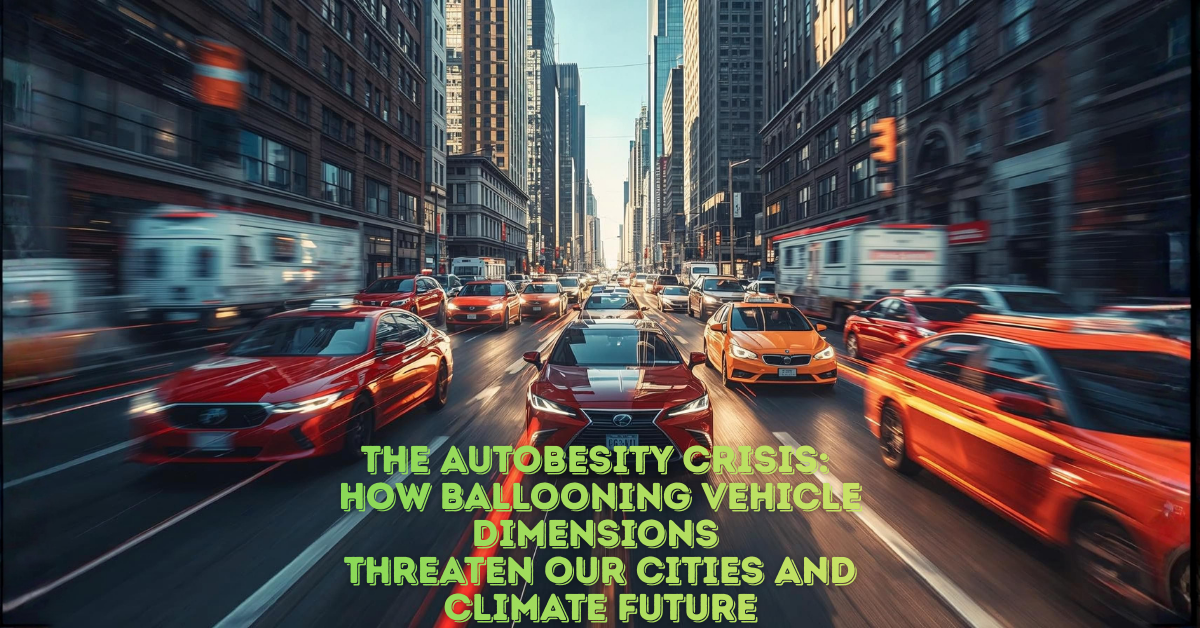

The Autobesity Crisis: How Ballooning Vehicle Dimensions Threaten Our Cities and Climate Future
Picture this: A mother waits at a zebra crossing with her six-year-old child. A towering SUV approaches—its hood standing taller than the child. If impact occurs, the elevated front end won’t strike legs but the head. This terrifying scenario plays out thousands of times yearly, yet most people remain unaware of a silent crisis transforming our streets: autobesity, the unchecked expansion of vehicle dimensions.
Modern automobiles aren’t just bigger—they’re dramatically heavier, wider, and taller than models from two decades ago. This transformation carries devastating consequences for pedestrian safety, urban infrastructure, environmental sustainability, and public health. While manufacturers market these giants as symbols of success and protection, research reveals a darker truth: bigger vehicles create bigger problems for everyone sharing the road.
Understanding the Scale of Vehicle Expansion
The automotive industry has undergone a profound metamorphosis. In Europe, the average car weight surged from 1.3 tonnes in 2001 to 1.6 tonnes by 2024—a 23% increase within just over two decades. France witnessed an even starker trend, with average vehicle weight climbing 30% over 30 years, while compact sedans ballooned by nearly 60%. The United Kingdom documented a 22% increase in average car dimensions over the past 20 years, fundamentally altering the relationship between vehicles and urban space. Greencarreports

This expansion transcends mere statistics. SUVs now weigh 300 to 660 pounds more than comparable sedans. Many modern electric SUVs tip the scales at 2,400 to 3,000 kilograms—comparable to military vehicles from previous eras. The Mini Cooper, once the epitome of compact urban mobility, exemplifies this transformation dramatically. Today’s Mini measures substantially larger than its predecessor, challenging the very concept its name represents.

Market Dynamics Driving the Giants
Consumer preference alone doesn’t explain this phenomenon. Automotive manufacturers discovered a lucrative business model: SUVs generate 20 to 25% higher gross margins than hatchbacks. The average SUV sells for ₹11-12 lakh compared to ₹6-7 lakh for small cars in India. This profit differential created irresistible incentives for automakers to shift production away from compact, efficient vehicles toward larger, more profitable models.linkedin
Global SUV sales exploded from 22% of the market in 2005 to 54% in 2024. In the United States, the trend reached extremes—SUVs and pickup trucks now constitute 75% of all vehicles sold. India witnessed similarly dramatic shifts, with SUV market share climbing from 48.4% in FY2023 to 56.9% by FY2025. Even in Europe, traditionally favoring smaller vehicles, SUV penetration grew from 8% to 45% in just 15 years. Greencarreports
Regulatory loopholes accelerated this trend. In the United States, the “light truck loophole” in Corporate Average Fuel Economy (CAFE) standards subjected SUVs and pickups to weaker fuel efficiency requirements than passenger cars. This policy framework effectively subsidized larger vehicles while penalizing smaller, more efficient options. The 1960s-era “Chicken Tax” imposed 25% tariffs on imported pickup trucks, preventing smaller vehicles from entering the American market and cementing domestic manufacturers’ dominance with oversized offerings.vox
Pedestrian Safety: The Hidden Body Count
The human cost of vehicle expansion cannot be overstated. Pedestrians struck by SUVs face 44% higher fatality risk compared to those hit by regular passenger cars. For children, this danger multiplies exponentially—82% higher fatality risk overall, soaring to 130% for children under age 10. Research indicates children under nine are three times more likely to die when struck by an SUV versus a standard car.npr

The mechanics of injury reveal why height matters so critically. Standard passenger cars typically strike adult pedestrians’ legs, causing them to roll over the hood—a terrible injury pattern but one offering survival possibilities. SUVs, with front ends exceeding 40 inches in height, strike torsos and heads directly. For children whose heads align with the height of an SUV bumper, impacts are even more catastrophic. Sciencedirect
Studies examining detailed crash reconstruction data found that vehicles taller than 35 inches inflicted more severe head injuries than shorter ones. Among tall vehicles, those with vertical (blunt) front ends proved more dangerous than sloped designs, causing more frequent and severe torso and hip injuries. Unlike other vehicle types, tall blunt vehicles primarily injured pedestrians’ torsos with their front ends rather than with hood tops, and frequently threw victims forward for secondary impacts.iihs
If all SUVs were replaced with standard passenger cars, pedestrian and cyclist fatalities would decrease by 17% in the United States and 8% in Europe. For children specifically, deaths would drop by 27% in America and 14% in Europe. These figures represent thousands of preventable deaths annually—a public health crisis hiding in plain sight. lshtm
Environmental Consequences Amplified
Vehicle weight directly correlates with fuel consumption and emissions. SUVs consume 20% more fuel than medium-sized cars due to carrying an average of 300 kilograms additional weight. Research demonstrates that every 100 kilograms of added weight increases emissions by 7.5 to 12.5 grams of CO₂ per kilometer for petrol vehicles.
The global SUV fleet generated approximately 1 billion tons of CO₂ emissions in 2022—increasing by 100 million tons from the previous year. If SUVs constituted a country, they would rank as the world’s fifth-largest emitter, surpassing nations like Japan, Germany, and South Korea. Between 2022 and 2023, oil consumption attributed to SUVs rose by 600,000 barrels daily, accounting for over 25% of overall annual growth in global oil demand. Oxfamnovib

Even electric vehicles fail to escape this weight penalty entirely. Larger EVs require bigger batteries, which demand more critical minerals—lithium, nickel, cobalt, and manganese. The resource-intensive nature of manufacturing SUVs contributes to broader environmental degradation, including deforestation, mining impacts, and water consumption. Battery production for electric SUVs results in significantly higher embedded emissions than forsmaller EV alternatives.
Analysis indicates that Europe will require 200 times the battery raw materials consumed in 2023 to decarbonize its fleet by 2050—unless action addresses vehicle sizing. However, shifting toward smaller electric vehicles could reduce demand for critical battery metals by 19-23%. Adopting less resource-intensive battery chemistries (like lithium iron phosphate or sodium-ion) could achieve an additional 20% reduction. Transportenvironment
Urban Infrastructure Under Strain
Cities designed decades ago struggle to accommodate today’s oversized vehicles. Research in the United Kingdom found that 21% of drivers consider their garages difficult to park in, while 16% believe their car is too big for available spaces. Consequently, 66% use garages primarily for storage rather than vehicle parking. This forces more vehicles onto streets, exacerbating congestion and reducing the space available to pedestrians and cyclists. Autobiz bloomberg

The Clean Cities campaign documented that, since 2021, over 1 million cars sold annually in the UK exceed standard urban parking dimensions, totaling approximately 4.6 million oversized vehicles by 2024. Parallel parking, already challenging, becomes nearly impossible with today’s dimensions—20% of drivers report struggling with this maneuver. Autobiz
Parking damage incidents reveal the practical consequences: cosmetic damage occurred in 49% of cases, with damaged bumpers (39%), headlights (17%), and wing mirrors (15%) following. Drivers most frequently collided with walls (16%), bollards or lamp posts (11% each), and parked vehicles (10%). Nearly half (41%) misjudged distances, while 23% found spaces too small, and 11% were still adjusting to their new vehicle’s size.
Beyond parking, heavier vehicles inflict disproportionate damage on road infrastructure. Studies demonstrate that road surface deterioration correlates exponentially with vehicle weight—a principle known as the “fourth power law” in civil engineering. Multi-story parking structures built in the 1960s and 1970s, designed when average cars weighed under 1 tonne, now face structural concerns as electric SUVs approach 3 tonnes. New York City’s 2024 parking garage collapse, while primarily attributed to age and neglect, occurred amid warnings that modern vehicle weights exceed original design specifications. intelligentinstructor
Health Impacts Beyond Crashes
Air pollution from larger vehicles poses significant health risks extending beyond traffic fatalities. Heavier vehicles emit more particulate matter (PM2.5), nitrogen oxides (NOx), and other pollutants linked to respiratory diseases, cardiovascular conditions, and premature death. Traffic-related air pollution associates with “all-cause, circulatory, ischemic heart disease and lung cancer mortality,”
PM2.5 concentrations remain elevated near busy streets, where exposure correlates with hospitalization for asthma, bronchitis, chronic obstructive pulmonary disease, pneumonia, and upper respiratory tract infections. Studies found relative risks of 1.24 for respiratory hospitalizations per tenfold increase in traffic exposure. Residential solid fuel emissions contribute significantly to these impacts, but vehicle emissions—especially from larger, less efficient models—remain substantial contributors. Science
The health benefits of reducing vehicle emissions are considerable. Analysis indicates that decreases in on-road transportation emissions in the United States from 2008 to 2017 prevented approximately 27,700 PM2.5-attributable deaths. Had emission factors remained at 2008 levels despite increased vehicle miles traveled, 48,200 deaths would have occurred—a 74% increase attributable to growing traffic volumes and larger vehicles. Shifting toward electric vehicles could prevent an estimated 150,000 premature deaths in the US through 2050, driven solely by air pollution reductions. Pmc.ncbi.nlm.nih
The Electric Vehicle Paradox
Electrification represents a critical climate solution, yet the trend toward larger EVs undermines potential benefits. While battery electric vehicles (BEVs) generate 66 to 70% lower life-cycle greenhouse gas emissions than conventional gasoline sedans, this advantage narrows when comparing SUVs. Electric SUVs still require dramatically more materials and energy to produce than compact EVs. nature
Larger batteries needed for extended range in heavy vehicles create supply chain pressures for critical minerals. Analysis demonstrates that a 25% electrification rate in the US with the current electricity mix yields modest air pollution reductions; achieving substantial benefits requires both higher EV adoption and grid decarbonization. Moreover, transmission grid congestion limits CO₂ reduction potential from vehicle electrification—even with full EV adoption, inadequate transmission capacity could result in congestion-induced emissions overhead of 16%. Sustainabilitybynumbers
The weight penalty extends to operational efficiency. Carrying 2,500 pounds of cargo in a pickup truck increases BEV emissions by 13% in some climates. Electric SUVs’ range decreases substantially under load—one study found a BEV’s range dropped 37% (from 301 to 190 miles) when hauling cargo in moderate climates. This creates a troubling dynamic: consumers purchase larger vehicles to accommodate occasional needs, carrying excessive weight and consuming unnecessary energy most of the time. pubs.acs
Economic and Social Inequities
The shift toward larger, more expensive vehicles exacerbates affordability challenges. As automakers retire smaller models, remaining options cost significantly more. SUVs typically command purchase prices 40 to 70% higher than comparable sedans, with commensurate increases in insurance premiums, fuel costs, and maintenance expenses. This trend effectively prices out first-time buyers and lower-income households from new vehicle markets.slate
In India, the share of small cars in passenger vehicle sales collapsed from approximately 50% two decades ago to just 3.24% recently, while SUVs captured 55% of the market. Entry-level vehicle accessibility declined dramatically as manufacturers pursued higher margins. Industry leaders acknowledge this challenge—Maruti Suzuki’s chairman noted that “temporary setbacks in demand” for small cars don’t alter their long-term strategy, predicting revival by fiscal year 2025-26 as affordability improves. Economictimes
The social justice dimension extends beyond economics. Research indicates African Americans are disproportionately represented among pedestrian and cyclist accident victims. Children face eightfold mortality risk when struck by SUVs compared to passenger cars, yet lower-income neighborhoods often lack infrastructure protecting vulnerable road users. Medical expenses prove highest for individuals struck by pickup trucks, particularly for those aged 65 and above. Sciencedirect
Barriers and Policy Solutions: Breaking the Cycle of Car Expansion
Regulatory bodies face tremendous challenges in curbing vehicle size inflation. Historical policies such as fuel efficiency standards inadvertently encouraged manufacturers to build larger vehicles, qualifying them for more lenient requirements. The lack of taxation based on vehicle weight or footprint let “light trucks” and SUVs proliferate. However, new policy directions show promise. vox
Some urban centers began experimenting with weight-based tolls and parking fees. For instance, Paris proposed higher parking charges for vehicles above a certain weight. India considers toll collection based on weight to address road damage cost allocation: heavier vehicles pay more. Government proposals to shift passenger car taxation toward emissions-based rather than engine capacity aim to incentivize lower emissions and compact vehicle design. Theicct
Strategic downsizing initiatives also gain momentum. The Global Fuel Economy Initiative encourages downsizing EVs to accelerate electric mobility and diversify supply chains—a 19–23% reduction in demand for critical battery metals achieved by shrinking vehicle sizes. The industry is betting on a “grand re-entry” of small cars, with automakers launching affordable models equipped for urban and rural consumers. Economictimes
Sustainable Mobility: Pathways to a Cleaner, Safer Future
Emerging solutions capitalize on the potential of small, efficient vehicles and alternate transport modes. Electrification’s full climate benefit can only be realized if coupled with downsizing and collective mobility shifts. Cities integrating compact EV fleets, shared vehicles, and robust public transit systems reduce congestion, lower emissions, and reclaim valuable urban space for pedestrians and cyclists. Activesustainability
Mobility-as-a-Service (MaaS) offers seamless travel using shared cars, e-bikes, and scooters. Such platforms result in reduced personal vehicle ownership and incentivize manufacturers to design vehicles specifically for shared urban environments—smaller, lighter, more efficient. Policies focused on complete streets, dedicated bike lanes, and walkable neighborhoods further amplify positive impacts.mdpi
Innovative research and pilot programs highlighted by Creators Catalyst-Sustainability Innovators drive adoption of greener transport solutions in cities like Bengaluru and Pune. By combining transit app integration, real-time pollution monitoring, and incentives for low-emission vehicles, Indian innovators inspire behavior change and make mobility more accessible for diverse populations.
Actionable Tips for Urban Drivers and Policy Makers
1. Choose the Right Vehicle:
Avoid oversized vehicles unless necessary for daily needs. Compact cars, hybrids, or electric models offer comparable safety, greater efficiency, and easier maneuverability in crowded cities.
2. Practice Mindful Parking:
Utilize garages for vehicles wherever possible to reduce street congestion. When shopping for a new car, check parking dimensions and garage clearances before purchase.
3. Advocate for Smart Policy:
Support municipal initiatives implementing weight- and emissions-based tolls and parking fees. Encourage city councils to invest in mass transit and cycling facilities.
4. Go Electric—But Go Small:
Opt for small or medium-sized electric vehicles. Larger batteries in big EVs require more minerals and have higher embedded emissions. Compact EVs offer substantial climate benefits without the resource penalty.
5. Stay Informed and Educate Others:
Share information about the dangers of vehicle size inflation with friends and family. Use social media, forums, and local community groups to disseminate research insights and advocate for sustainable solutions.
Real Story: Learnings from the Streets
On a humid June morning, a young schoolboy in Pune dashed across a busy road. Traffic had slowed, but a large SUV, its driver distracted by a phone call, didn’t notice the child. The vehicle’s high front end hit the boy with force, pushing him onto the pavement. Bystanders rushed to help; thankfully, he survived, suffering only minor injuries. The event sparked a neighborhood conversation about SUV dangers, inspiring local residents to pressure city officials for traffic calming devices and improved pedestrian crossings. The story became a catalyst for community-driven change, leading parents to choose smaller cars and schools to organize pedestrian safety workshops—proving collective action, fueled by awareness, can reshape urban mobility for the better.
Future Directions: Rethinking Mobility for Sustainability and Safety
Looking ahead, the momentum toward urban downsizing and multimodal transport will accelerate climate, safety, and infrastructure resilience. Policy alignment and consumer education must focus on right-sizing mobility—building streets around people, not bloated machines. Mobility-as-a-Service, shared vehicle platforms, and compact electric cars will lead the transformation, while innovative cities pilot solutions that prioritize wellbeing for all urban dwellers.
Call to Action
Autobesity represents more than an automotive trend—it is an existential challenge for urban life, public health, and the planet’s future. Every conscious driver, vigilant policymaker, creative entrepreneur, and engaged citizen has a role in reversing this trajectory. Make informed choices, support smart policy, and amplify the movement for safe, sustainable streets.
Are you ready to be part of the change? Share this post, add your insights in the comments below, and join the conversation. Together we can halt autobesity before our world is driven off course.













Leave a Reply